The Afghanistan Humanitarian Crisis
The Context
With humanitarian efforts in Afghanistan built on the foundation of United States military intervention in the region, the crisis was certainly going to be spun to paint the United States and western aid organizations in the best light. After the September 11, 2001 terrorist attacks on United States soil, the George W. Bush administration was prompt to send troops into Afghanistan on claims the focus would be to impede Afghan efforts to create a terrorist safe haven within their country (Third Way). The true intentions of the militarized intervention seemed to be to tear down and rebuild the country in a way that best suited the U.S. After the United States military forced the collapse of the Taliban, President Bush, in a speech at the Virginia Military Institute in 2002, stated that “By helping to build an Afghanistan that is free from this evil and is a better place in which to live, we are working in the best traditions of George Marshall,” (CFR). With his reference to former Secretary of State George Marshall, Bush reinforced a Western desire to use aid as a front for personal ambition. This selfish desire to rebuild an Afghanistan in the way that best suited the United States meant the neglect of the cultural, social, and physical needs of the Afghan people and a focus on what the givers believed they needed.
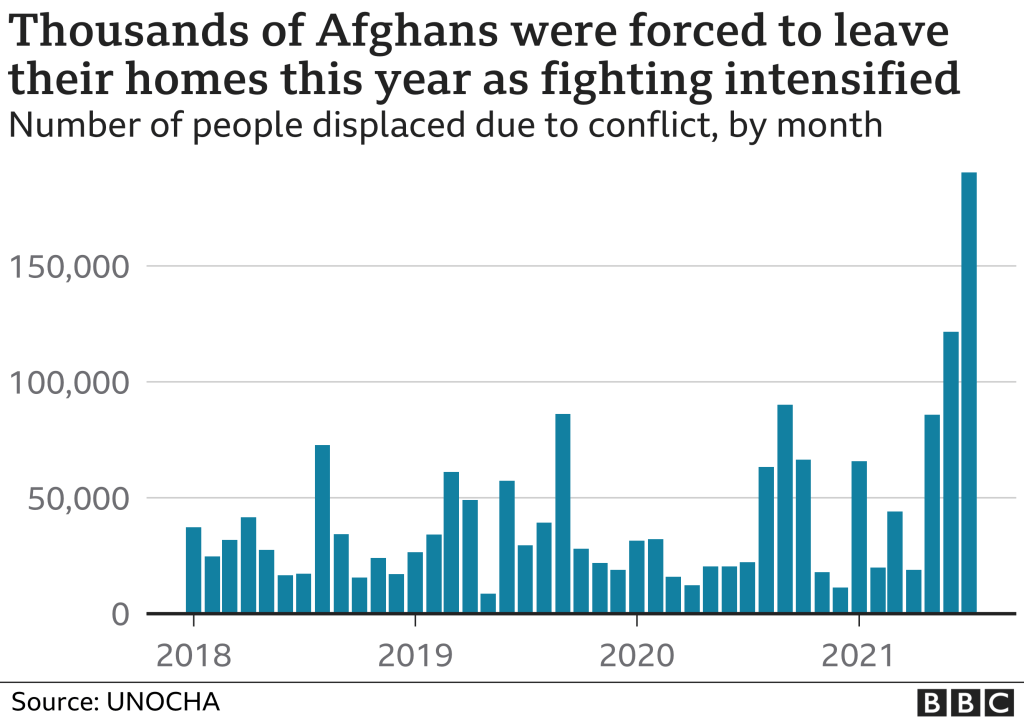
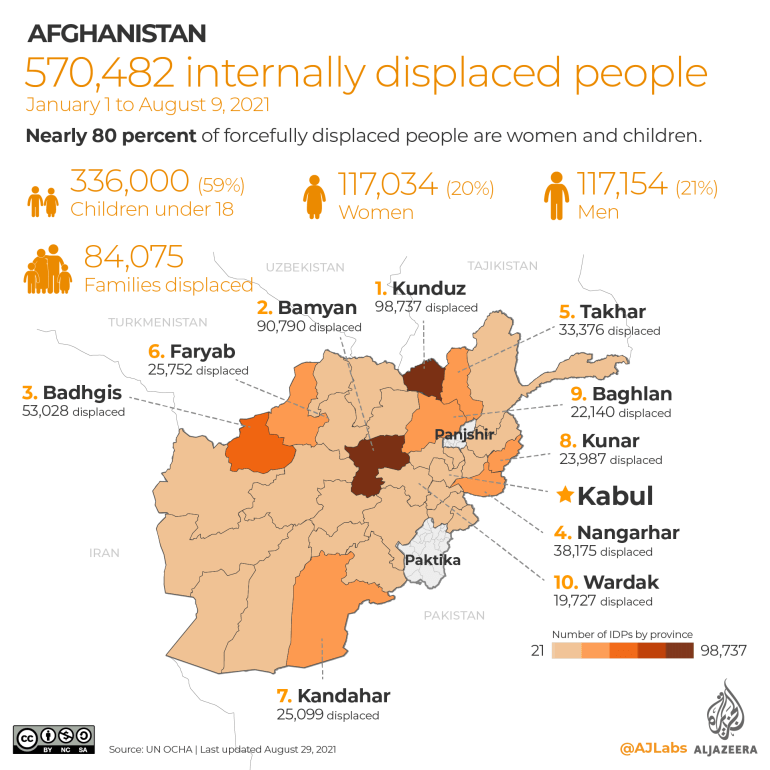
More recently, as Joe Biden shifted into the presidency, his decision to pull troops out of Afghanistan cultivated the prime arena for aid organizations to utilize media power for their own benefit. As the United States military pulled out of Afghanistan in a swift move, it resulted in the perfect opportunity for international aid organizations to get their names heard. International Humanitarian Law states that warring parties must acquire a responsibility to provide an active humanitarian response when in foreign territory (Stockton). Yet, the United States was not the only nation that sought involvement in the providing of aid. According to the United Nations, more than 40 million Afghanistan citizens were in need of humanitarian aid as of August 2021 (WSJ). Amongst the top organizations involved in the giving of aid in Afghanistan is the Church World Service, UNICEF USA, Save the Children, Doctors Without Borders USA, and more (Charity Navigator). As millions of Afghans fled out of the country when the Taliban took over control of the country, all eyes seemed to be on the crisis as the refugees sought an avenue out. The Wall Street Journal reported that more than 570,000 Afghanistan civilians fled their homes in 2021 alone (WSJ). Not to mention, the crisis that the millions of Afghani people who were not able to seek refuge in other countries faced while stuck at home. Due to the many that were not able to leave, a large focus on aid is focused on education. For example, the UNICEF organization was focused on keeping all 18,000 schools in Afghanistan running (WSJ).
The Receivers
Although the news cycle moved to the next hot topic and past the ongoing crisis in Afghanistan, the needs and suffering of those in Afghanistan and those who have fled still remain. According to the UNHCR, Afghans represent one of the largest displacements of people in the world (UNHCR). The recent Taliban takeover of the country after the retreat of United States troops only added to the number of refugees from the country. In terms of the crisis within Afghanistan itself, the organization World Vision reported that 18.4 million people within Afghanistan are in need of “lifesaving aid” (World Vision). Furthermore, the organization reports that 9.5 million people are facing food insecurity within Afghanistan and more than one million children are close to starvation (World Vision). The majority of those displaced from the crisis and violence in Afghanistan are children and women (Al Jazeera). Those in need of foreign aid seems limitless within the country, making Afghanistan the prime target for humanitarian institutions across the world. Nevertheless, the focus of aid is not these receivers.
The Givers
The negligence of Afghan desires in the militarized intervention bled into the humanitarian aid response to the crisis in Afghanistan again perpetuating an egocentric type of humanitarian aid as shown through organizations’, such as Save the Children’s, response to the crisis. The United States, as of 2019, gave the most foreign aid to the country of Afghanistan, where they largely perpetuated the problem (Statista). As of January 2021, more than 1,818 non-governmental organizations have a presence in Afghanistan (Limiting Space). For over 40 years, Save the Children has delivered aid focused on children to the people of Afghanistan (Save the Children). In order to promote their aid efforts in Afghanistan and elsewhere, Save the Children bolsters celebrity ad campaigns to push the needs of the organization to a broad network. In many ways, the very purpose of humanitarianism is contradicted by the actions this organization took. As Jennifer Garner, famous A list movie star, trudges through an Afghanistan refugee shelter in the United States for Save the Children, she articulates the needs of the receivers for them, essentially taking their voice away. The Save the Children organization is not the only aid institution to focus their efforts in “helping” away from the receivers and towards the givers. UNICEF, which has been providing aid to Afghanistan residents for over 65 years, bolsters a current roster of over ten celebrity ambassadors (UNICEF). This roster includes A-list celebrities, like Selena Gomez, who they utilize to promote their needs as an organization. The givers of aid, both institutional and individual givers, jumped at the opportunity that Afghanistan and the current crisis represented: the chance to make their voices louder. It seems that institutions neglect the reality that while they turn the volume up on their own needs, they silence the needs of the receivers.

The Analysis
The recent and ongoing Afghanistan crisis proves to be a modern liberal humanitarianism case study that highlights the self-interested motives of humanitarian organizations and the misuse of the word humanitarian in general. Although the United States and other states have an obligation to help those in need within Afghanistan in accordance with International Humanitarian Law and global pressure, they continue to miss the mark on how to go about delivering aid. Even though the United States aggravated the humanitarian crisis within Afghanistan, they are discussing delivering aid as if they are the saviors of Afghanistan, instead of the destroyers. This can be seen through American aid organizations’, such as Save the Children and UNICEF USA, use the crisis as an opportunity for self-promotion. With the organizations celebritizing the needs of the receiver, it switches the focus of “the affective relationship between spectator and sufferer onto a relationship between spectator and celebrity as the most ‘authentic’ figure of pity” (Chouliaraki 15). This switch of focus takes away the actual needs of the receiver and instead focuses on the needs of the organization. It is not the receiver of aid that individual givers are supporting, but rather the aid organization that the individual giver is supporting.
Effectively, this misguided focus creates a major disconnect. The rift between the giver and the receiver grows so big that the needs as defined by the receiver are neglected, and are instead defined by the giver. In a journal article title “Foreign Aid and the Culture of Contracting,” the authors not the issues with not considering a population’s culture when providing aid. Essentially, the authors say “Culture contributes to securing private property rights, promoting democracy, facilitating improved provision of public goods, and economic growth generally” (Coyne 1). Without the consideration of culture, aid can never truly be effective. Thus, when aid organization silence the voice of the receivers, they are hindering their own mission of delivering compelling aid. Although the organizations boast statistics about their involvement, they fail to hold a mirror up to themselves and analyze if they are doing things correctly. As can be seen through the media response to the Afghanistan humanitarian crisis, this self-indulgent mode of providing aid will continue.
 Humanitarianism Final